









Key Takeaways About PEX Manifold Upgrades
A PEX manifold upgrade replaces shared branch plumbing with dedicated home-run lines to each fixture. This guide helps homeowners and property managers decide when upgrades matter for comfort and repairs.
- Identify slow fixtures and pressure loss with simple flow checks.
- Prevent whole-house shutoffs by using isolation valves at the manifold.
- Avoid extensive demolition by locating manifolds in utility spaces.
- Spot material or corrosion issues before tying new runs in.
- Reduce wait time for hot water with shorter dedicated runs.
- Plan balancing and testing using pressure gauges and flow meters.
Introduction
Slow fixture flow, uneven hot water, and hard-to-service supply lines are common home plumbing frustrations. PEX Manifold Upgrades focus on home-run piping that sends a dedicated line to each fixture. That layout reduces wait time at faucets and helps isolate problems quickly. Homeowners notice the difference in everyday use and when repairs are needed.
Isolation and balancing matter because one busy fixture should not starve the rest of the house of water. A manifold lets you shut off a single vanity or fixture at the source without affecting the rest of the system. Balancing valves help tune flow so showers and dishwashers run more consistently. These changes improve comfort and make troubleshooting faster for a plumber.
Retrofit work raises realistic questions about access, wall or crawlspace routing, and how much demolition the project requires. In many cases a manifold can be located in a laundry room, utility closet, or near the water heater to minimize invasive work. A professional will inspect pipes, shutoff valves, and available space before recommending a plan. For properties in Oakley, OH or Montgomery, OH, older homes often need extra planning for routing and access.
Material choice affects durability, repairability, and compatibility with existing fittings and valves. PEX types and manifold materials each have trade offs that affect long term performance and serviceability. A plumber will check supply pressure with a pressure gauge and inspect existing shutoff valves and fittings during diagnosis. If you notice gurgling, long wait times for hot water, or frequent fixture shutoffs a professional should evaluate options for upgrading the system.
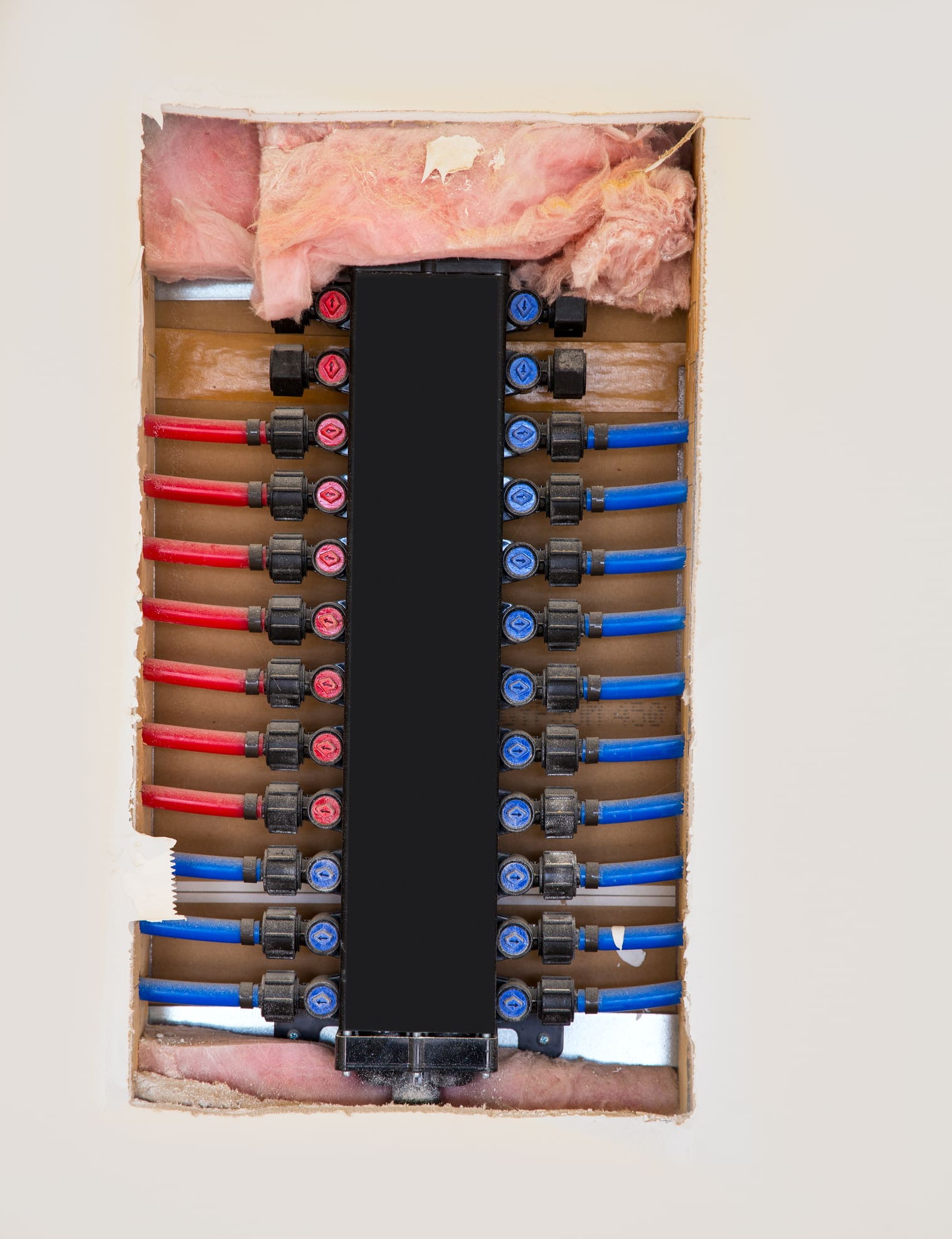
What Home Run PEX Manifolds Are And How They Work
A home-run PEX manifold is a central plumbing hub that sends a dedicated PEX line to each fixture. The manifold collects incoming supply water and splits it into individual runs so each fixture gets a direct feed. Each run stays isolated with its own shutoff valve at the manifold for quick repairs. Homeowners often ask if a manifold improves pressure and the short answer is yes for many layouts.
- One dedicated line per fixture reduces shared flow losses.
- Individual shutoffs let you isolate repairs without shutting down the house.
- Shorter runs to fixtures mean less heat loss for hot water.
- Manifolds simplify adding or rerouting fixtures later on.
Inside the manifold box you’ll find inlet and multiple outlet connections and isolation valves for each run. A professional will trace supply and return lines, test main supply pressure with a pressure gauge, and inspect connection fittings. They use a simple flow test at fixtures to estimate each circuit’s capacity before recommending changes. In Montgomery, OH properties, installers often locate the manifold near the water heater or utility area for easy routing.
Manifolds work with different PEX types and with brass or plastic bodies depending on preference and budget. Compatibility with existing fittings matters, so a plumber checks compression connections, crimps, or push-fit terminations during inspection. For reading on flexible tubing options and tradeoffs, see the guide on flexible plumbing materials. If you hear knocking, steady drops in pressure, or notice unequal hot water timing, a pro should evaluate the manifold layout in your home.
When diagnosing manifold needs, a technician looks for visible leaks, measures pressure at the manifold with a gauge, and runs sequential flow tests at fixtures. They also inspect shutoff valves and manifold mounting for signs of stress or corrosion before recommending replacement. For properties in Oakley, OH older piping routes may require extra planning to reach a central manifold location. Clear diagnostic steps let homeowners choose upgrades that match their daily needs and long term maintenance plans.
Benefits Of PEX Manifold Upgrades For Faster Flow
Home-run manifolds cut friction losses by keeping water moving through one straight run to each fixture, which often increases flow at taps. Faster delivery reduces the time you wait for hot water, especially when runs replace long shared branches that cause pressure drops. Installers also note that consistent pipe sizing on each run preserves available pressure across simultaneous fixtures. For homeowners in Oakley, OH, this difference shows up during busy morning routines when multiple fixtures run at once.
Manifolds make targeted upgrades easier by letting you add or resize a single circuit without touching the rest of the system. This modular approach reduces disruption compared with reworking branch networks that require cutting drywall or rerouting many lines. A technician can swap a single run to larger PEX tubing or reroute a problem line while keeping other outlets in service. That lowers project time and keeps interruptions localized to one area of the house.
Because each run has its own isolation valve at the manifold, balancing becomes more precise and repeatable across fixtures. A plumber can use a pressure gauge and simple flow tests at each outlet to open or throttle valves and tune flow rates housewide. Proper balancing helps showers maintain temperature when a dishwasher or washing machine starts, improving comfort during simultaneous use. In Montgomery, OH homes with older mixed plumbing, this control can significantly reduce complaints about uneven flow.
When replacing large sections of piping, professionals often pair manifold upgrades with selective repiping to ensure compatibility and longevity. They inspect fittings, test supply pressure, and check shutoff valves before recommending changes, which may include partial repiping in high-wear areas. For larger retrofits or visible corrosion, consider reviewing options with a repiping specialist and learning more about full or partial replacement choices at repipe services. A clear plan reduces surprises and helps homeowners choose material and routing that deliver faster, reliable flow.
Common Causes Of Slow Fixture Flow And Why It Happens
Mineral buildup inside old valves and aerators often narrows flow and causes slow fixture delivery over time. A visible chalky deposit at a faucet or reduced spray from a showerhead signals scale that a plumber can test. Technicians inspect supply stops, aerators, and shower cartridges and may run a simple flow check with a pressure gauge. If scale is severe, they recommend cleaning or replacing affected components to restore full flow.
Partially closed or failing shutoff valves further reduce flow and create uneven pressure during simultaneous use in different rooms. Homeowners might hear a whining or see pulsation when valves do not open fully under pressure. A pro will verify valve operation and examine packing nuts, stem movement, and shutoff response during an inspection. For guidance on local valve types and isolation at fixtures, see the primer on fixture shutoff valves basics.
Pinholes, corrosion, or debris in older branch lines can restrict flow even when the main supply pressure looks normal at the meter. Professionals trace low-flow circuits and perform dye or pressure tests and visual checks at accessible fittings and cleanouts. They may temporarily disconnect a fixture to observe supply flow directly and compare readings with manifold outlet pressures. In Montgomery, OH properties with mixed materials, corrosion at transition points commonly explains unexplained slowdowns.
Undersized or worn supply hoses and connectors add friction that lowers fixture flow noticeably during peak use. A homeowner might notice a stronger stream when a dishwasher is off, indicating shared undersized connectors as the cause. During diagnosis, a plumber measures flow rates and inspects hose diameters, crimps, and quick-connects for restrictions or damage. Replacing small-diameter connectors or upgrading to a dedicated manifold run often removes these bottlenecks.
How Isolation Valves Help Balancing And Maintenance
Isolation valves let a plumber route flow where it is needed without shutting down the whole house, making targeted adjustments faster. A technician can close a single circuit and test pressure at the manifold with a gauge to confirm restrictions or leaks. During balancing, the pro will partially throttle certain valves to raise flow elsewhere and observe fixture responses. Homeowners often hear reduced noise and see steadier faucet streams after measured valve adjustments are made.
- Isolate a single fixture for repair without affecting other rooms.
- Fine-tune flow to maintain shower temperature during simultaneous use.
- Allow pressure testing of individual runs for accurate diagnosis.
- Simplify seasonal winterization of unused circuits.
When diagnosing balance issues, a plumber checks manifold outlet pressure one run at a time using a pressure gauge and flow meter. They also cycle isolation valves slowly to spot sticky stems or worn packing that hide as intermittent restrictions. If readings show drops at specific outlets, the tech will trace that run for fittings, crimps, or debris. For clear next steps on whole-house pressure concerns, professionals often reference basic adjustment procedures like those in water pressure tips.
Isolation valves also reduce repair time because a contractor avoids shutting off the main supply and losing hot water to the entire home. In Oakley, OH and Montgomery, OH properties, this localized control helps during partial repipe work or appliance replacements. Homeowners should watch for leaking valve stems or slow-turn shutoffs as cues to call a pro. If you detect persistent flow imbalance or noise after adjustments, contact a licensed plumber for a full inspection and written recommendations.
Material Choices For PEX Manifold Upgrades And Durability
Choose manifold body materials with durability and service access in mind because manifolds sit under constant pressure and temperature cycles. Brass bodies resist impact and corrosion better than many plastics and usually accept threaded gauge and valve fittings easily. Plastic manifolds weigh less and resist scale differently, but a plumber will check compatibility with your existing isolation valves and compression fittings before recommending a swap. When professionals test materials they look for visible stress, thread integrity, and proper sealing at all connections.
PEX tubing type and size affect long-term performance, so discuss oxygen-barrier options and diameter with your installer to match appliance requirements. A larger diameter run reduces friction loss and preserves flow during simultaneous fixture use, which matters for multi-bath homes. Professionals will measure supply pressure and flow with a pressure gauge and flow meter to confirm that chosen tubing meets expected demand. They also verify crimp or expansion fittings for proper installation and sealing during the post-install test.
Valve and fitting materials matter for maintenance access because threaded metal ports simplify adding gauges or flow-control devices later on. Consider manifolds with service ports that accept a pressure gauge or temporary flow meter so a technician can diagnose issues without disassembly. Homeowners can ask for manifolds with replaceable isolation cartridges to avoid full manifold replacement if a valve fails. During diagnosis, a pro will run sequential outlet checks and note any outlet with an abnormal pressure drop for targeted repair.
For retrofit projects, routing and mounting choices influence which materials work best, particularly where space limits a manifold box installation. In tight utility closets in Oakley, OH or behind water heaters in Montgomery, OH, compact manifold designs and low-profile valves may minimize trimming or boxing work. Your installer will examine wall studs, available clearances, and existing shutoff valves to recommend compatible bodies and connector types. If you notice leaking at a manifold or hear intermittent knocking, contact a licensed plumber to inspect fittings and recommend durable material changes.
Retrofit Considerations For Existing Plumbing Systems
Retrofitting a manifold into an existing home often starts with an access review to limit drywall cuts and preserve finishes. A technician will map current supply runs and measure clearances behind cabinets, in closets, or near the water heater. They inspect existing shutoff valves and test supply pressure with a pressure gauge to confirm the home can support dedicated runs. If concealed hot-water returns exist, the installer notes them to avoid unnecessary rerouting during the upgrade.
Older materials and transition fittings need special attention to avoid galvanic corrosion or leaks where metals meet PEX connections. During inspection, a plumber looks for visible corrosion at adapters, compression fittings, and threaded ports and may remove a small section to confirm internal condition. They also verify that existing shutoffs operate smoothly to serve as isolation points during the switchover. If a run shows restricted flow, the pro may recommend replacing that segment before tying it into a new manifold.
Routing decisions affect whether runs use stud bays, attic space, or crawlspaces, which changes labor and protection needs for the piping. Installers plan for thermal protection in unconditioned spaces and will often recommend pipe insulation for exposed hot-water runs to reduce heat loss. Homeowners can learn more about protecting exposed lines in the guide on pipe insulation upgrades. In some retrofit paths, a short drywall opening provides the cleanest route with minimal cosmetic repair.
Balancing retrofit scope with daily use keeps disruption low for occupants during work in Oakley, OH homes that often have tight utility spaces. A professional schedules sequencing so critical fixtures remain operational while crews convert circuits to the manifold in stages. After installation, the plumber performs sequential outlet pressure checks and documents readings for future troubleshooting or adjustments. If you hear new noises, notice drips, or suspect pressure loss after the retrofit, contact a licensed plumber for a written inspection and recommended corrections in Montgomery, OH.
When To Call A Professional For Manifold Service
Know when a problem needs professional manifold attention instead of a DIY fix to prevent greater damage or hidden leaks. Visible leaking at manifold joints, persistent pressure loss after basic checks, or cross-connection symptoms require licensed inspection. A plumber will use a pressure gauge and flow meter to confirm where the restriction or leak originates. If you detect unusual banging or steady dripping near manifold fittings, schedule a diagnostic visit promptly.
- Loss of hot water to multiple fixtures
- Repeated tripped valves or stuck stems
- Visible corrosion or weeping at manifold ports
- Large or unexplained drops in outlet pressure
During service, the technician isolates circuits and attaches a pressure gauge to individual outlets to measure differential readings. They will also perform a sequential flow test at fixtures while adjusting isolation valves for balancing. A pro inspects manifolds for thread integrity, compression fittings, and signs of material fatigue or stress. For homeowners in Oakley, OH this method clarifies whether a simple valve replacement or a larger manifold swap is needed.
If retrofit routing or access looks difficult, bring in a professional who documents constraints and proposes staged work to limit disruption. The plumber can produce a written plan showing pressure readings, recommended material choices, and timing for the work. For Montgomery, OH properties with tight utility spaces, installers coordinate access and finishing to reduce drywall repairs. When in doubt about safety or leak risk, contact a licensed plumber rather than attempting complex manifold repairs yourself.
Cost Versus Performance Decisions For Homeowners
Deciding between upfront cost and long-term performance starts with matching goals to usage patterns rather than picking the cheapest manifold. Consider how many fixtures run at once and whether you plan future remodels when weighing larger-diameter runs or extra circuits. A professional will measure current supply pressure and perform flow checks to forecast whether a single upgrade will meet peak demand. These tests give homeowners realistic expectations about the performance gains they can expect after work completes.
Material selection affects both initial price and future service expenses, so evaluate repairability alongside cost when comparing brass and plastic manifolds. Ask whether replacement valves and fittings are readily available and how easy it will be to swap a cartridge without replacing the whole body. Technicians often document outlet pressures and note any runs that would benefit from upsizing during the initial visit. That documentation helps owners decide if staged upgrades make more financial sense than a full immediate overhaul.
Retrofit complexity drives labor costs, so examine access and routing before approving extensive demolition or rerouting work in your home. A skilled installer can sometimes locate the manifold in a nearby utility area to reduce drywall repair and save on labor time. For homeowners in Oakley, OH, confined utility spaces can increase installation time, which affects the overall budget. Request a written scope showing expected route options and the tradeoffs for each so you can compare bids accurately.
When budgeting, include the value of diagnostic testing, balancing adjustments, and documentation that a plumber provides after installation. These deliverables help with future troubleshooting and may reduce repair time if issues arise later. If the project touches bathroom supply lines consider coordinated upgrades like new shutoffs or feeder hoses to avoid repeating work, as explained in the guide on bathroom plumbing upgrades. For properties in Montgomery, OH, ask the installer to show measured pressure readings so you understand the expected performance difference before payment.
Frequently Asked Questions
How do PEX Manifold Upgrades improve faucet and shower flow?
PEX Manifold Upgrades route each fixture on a dedicated home-run line, reducing bends and pressure loss for stronger faucet and shower flow. Dedicated lines keep hot and cold water separate until the fixture, cutting wait time for temperature balance. Manifolds allow individual shutoffs and flow adjustments, so a plumber can balance supply to fix weak outlets. Working on manifolds involves plumbing connections and pressure changes, so hire a professional to avoid leaks or code issues.
What access and routing challenges appear in retrofits?
Retrofits often require finding a central location for a PEX manifold that stays accessible while minimizing new wall or ceiling openings. Routing new home-run PEX tubing can conflict with existing framing, ductwork, or electrical runs and may need selective drilling or short chases. Tight attic or crawlspace access raises safety concerns, so use caution and hire a professional for safe routing and secure supports. Inspectors will check shutoff valves, manifolds, and visible fittings for leaks and proper labeling before closing walls.
How do isolation valves help balance multiple fixtures?
Isolation valves on a PEX manifold let you shut off individual branch lines without disrupting the rest of the system. Technicians use these valves to throttle flow to specific fixtures and reduce pressure imbalances during simultaneous use. By adjusting valves, a plumber can fine-tune supply so each fixture receives steady flow and proper temperature. If you notice persistent low flow or banging, exercise caution and call a professional to inspect pressure, PRV, and valve settings.
Which manifold materials last longest and why?
Brass manifolds typically last the longest because brass resists corrosion and handles repeated thermal cycling without cracking. Stainless steel offers similar longevity and adds strong resistance to chlorinated or aggressive water chemistry. Plastic composite manifolds can perform well when paired with quality fittings but may age faster under high heat or UV exposure. If you suspect corrosion or leaks, exercise caution around pressurized lines and call a professional to inspect and recommend PEX Manifold Upgrades.
How will a pro diagnose low flow before upgrading?
A plumber starts by reproducing the low-flow symptom at affected fixtures and noting time-of-day and any sounds from pipes. They measure static and running pressure with a pressure gauge at a hose bib or near the water heater. Next they inspect visible supply valves, check for clogged aerators or debris, and test branch versus home-run supply differences. If pressure or flow issues persist, they caution homeowners about potential risks and recommend professional diagnosis before PEX Manifold Upgrades.