








Key Takeaways About Toilet Wax Ring Issues
A wax ring seal sits between the toilet and the drain and prevents water and sewer gas from escaping. This summary is for homeowners and property managers who notice leaks odors wobbling toilets or damp floors and need to act quickly.
- Identify faint sewer smells dampness or wobbling at the toilet base.
- Prevent small leaks from reaching the subfloor and framing.
- Avoid DIY fixes that only mask symptoms without addressing the seal.
- Spot flange damage loose bolts or soft flooring during inspection.
- Reduce mold and rot risk by confirming leaks with moisture meters.
- Plan professional diagnosis and repairs when leaks persist after attempts.
Introduction
A failing wax ring often starts as a small problem at the toilet base and turns into persistent leaks that damage floors. Homeowners notice steady dampness, bad odors, and wobbling toilets before the full leak appears. Ignoring these signs allows water to reach subfloor and framing, creating rot and mold. In Montgomery, OH, small leaks can quickly become costly repairs when left alone.
The real problem is the seal between the toilet flange and the waste pipe breaking down over time. Wax compresses, shifts, or fails when a toilet is loosened, reset, or installed improperly. A failed seal can let sewer gases into the bathroom and cause recurring soft spots in the floor. These outcomes matter because they affect health, structure, and resale value.
Many homeowners try patching the visible symptoms instead of addressing the seal itself and that causes repeated leaks. Temporary fixes like sealing around the base with caulk hide the issue and mislead people about the source. Repair delay often increases the scope of work and can require subfloor replacement. In Oakley, OH properties with older fixtures, delayed action commonly reveals wider damage when walls and floors are opened.
A professional evaluation looks beyond surface water to find the root cause and lasting fix using inspection tools and test approaches. Technicians check the closet flange, wax ring condition, toilet bolts, and surrounding floor integrity during diagnosis. Choosing the right replacement and ensuring a secure flange connection prevents return visits for the same leak. For medium risk issues or lingering odors recommend contacting a licensed plumber to confirm the problem and next steps.
How Toilet Wax Ring Issues Develop Over Time
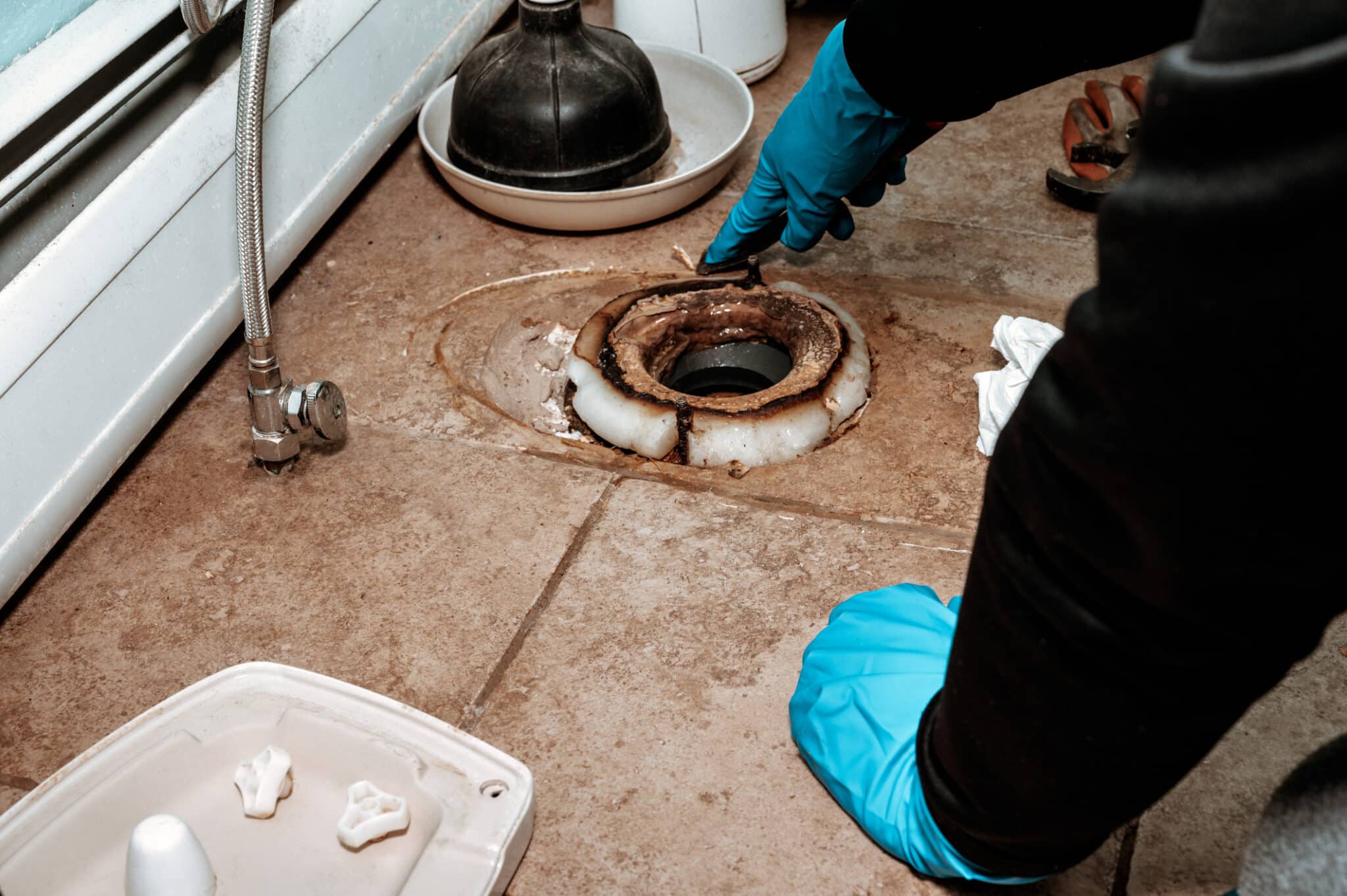
A toilet wax ring issue means the wax seal between the toilet and drain has begun to fail or compress. Small movements and normal use slowly break the seal as wax loses thickness and shape. Over time repeated toilet rocking or reinstalling the fixture accelerates wear on the wax ring and flange. Homeowners often ask if a slow leak will get worse, and the answer is yes because water and waste keep passing the compromised seal.
- Wax deforms under pressure and age.
- Toilet movement can fracture the seal.
- Improper installation leaves gaps in the ring.
- A damaged flange prevents proper seating.
Moisture that starts as a tiny seep becomes visible staining and soft tiles after repeated exposure. A failing ring allows sewer gases and odors to enter the bathroom before large amounts of water appear. Inspecting the base for steady dampness or blackened caulk helps identify leaks early. In many cases a moisture meter reading or a simple dye test shows whether water tracks from the base.
Another common development is gradual loosening of closet bolts from damp subfloor or vibration during use. Loose bolts change how the toilet sits and let the next flush push more water through the gap. Professionals often check flange height, bolt alignment, and flange condition to confirm this progression. Find more on how a wobbling toilet signals deeper problems at wobbling toilet.
Properties in Montgomery, OH and Oakley, OH may show different timelines but similar patterns of worsening damage. Early action limits water exposure to the subfloor and reduces the chance of mold and rot. If you see persistent dampness or odor, schedule an inspection so a plumber can confirm the seal failure with visual checks and basic tests. Prompt diagnosis prevents small toilet wax ring issues from turning into major repairs.
Common Causes Of A Failing Wax Ring
Worn wax is not the only reason seals fail, the closet flange itself can crack or sit too low for a good seal. A damaged flange prevents the wax ring from compressing evenly and allows water to escape during each flush. Corroded or broken closet bolts also shift the toilet and create gaps where the seal once held tight. Homeowners in Montgomery, OH should know flange condition often determines whether a simple replacement will stop leaks.
Repeat toilet removal or reinstallations can smear or thin the wax ring and leave microscopic channels for leaks to form. Chemical cleaners or solvents that contact the wax can change its texture and reduce sealing ability. Subfloor movement caused by settling or a previously damp area may misalign the flange and toilet base. In Oakley, OH properties with older flooring, these cumulative stresses can reveal themselves as recurring leaks over time.
Incorrect wax ring type can cause persistent issues when mismatched to the flange height or toilet outlet. A flange set below finished floor height needs an extended-height ring or an extra spacer to build up the seal. Toilets with large base recesses sometimes require a thicker or specialized wax ring to fill voids completely. When deciding between repair and replacement, read about overall options at toilet repair vs replacement.
Poorly tightened toilet bolts are a frequent, avoidable cause of seal failure because they let the fixture rock with use. Movement fractures the wax and lets wastewater escape before anyone sees puddles on the surface. Debris in the flange or pipe opening can also prevent the wax ring from seating uniformly. A professional inspection will check flange height, bolt torque, and the correct wax ring type to find the true cause.
Early Warning Signs Of A Compromised Seal
One early sign is a faint sewer smell that appears intermittently after flushing and then fades. This odor often indicates gas passing a partial seal rather than a full flood beneath the toilet. A homeowner might notice the smell strongest near the base or when the bathroom stays closed. If the scent recurs, it deserves prompt inspection to avoid escalation.
Another cue is small, dark staining at the base that appears without an obvious spill. These marks can come from mineral-rich water wicking out from a compressed or cracked wax ring. Check for soft grout, discolored caulk, or ring-shaped stains where the toilet meets the floor. Photographing these spots helps a professional compare changes over time during diagnosis.
Sounds during or after a flush can also point to a compromised seal, such as gurgling or water running longer than usual. These noises sometimes mean water is escaping into the flange area and creating air pockets in the trap. A plumber will listen at the base, test the shutoff valve, and perform a dye test to confirm whether the wax ring allows leakage. Recording the sound behavior during several flushes gives useful diagnostic information.
Movement or micro-rocking of the toilet signals the seal is under uneven pressure and at risk of breaking fully. Even subtle shifts can create hairline gaps that let water pass during every flush cycle. During a professional check, techs inspect the closet flange, closet bolts, and flange-to-floor connection to find misalignment or damage. Homeowners in Montgomery, OH and Oakley, OH should document mobility and leaks, then schedule an inspection before visible water damage appears.
Visible Leak Symptoms And Water Damage Risks
Visible pooling around the toilet base often means water has passed the wax seal and reached the finished floor beneath. Tiny puddles that appear only after many flushes show a slow but steady leak that worsens over time. Check the floor texture near the base for softening or cupping that indicates water has saturated the tile or vinyl. A moisture meter reading near the flange can confirm elevated dampness under the surface quickly.
- Discolored flooring indicates repeated exposure.
- Warped trim shows longer-term moisture contact.
- Peeling grout suggests water migration under tiles.
- Stained subfloor access points reveal active leaks.
Crumbling or darkened subfloor along the toilet perimeter signals decay from persistent wetting beneath the wax ring. When floor sheathing weakens, nails and screws may pop, producing creaks underfoot near the fixture. Inspectors often remove the toilet to view the closet flange and subfloor condition directly for accurate assessment. Photographs taken before removal help document damage extent for repair planning and insurance questions.
Mold or mildew growth near the base shows biological activity from ongoing moisture and trapped organic material. Visible mold often appears as black or gray specks in grout lines, caulk, or floor seams close to the toilet. A professional will test humidity levels and examine hidden cavities for spore presence before recommending remediation. For unseen pathways and broader moisture problems, review guidance on recognizing hidden leaks at hidden water leaks.
Discoloration or soft spots at the wall base behind the toilet may indicate leaks reaching framing or drywall. Water climbing from a failed seal can damage adjacent wall finishes and cause paint to bubble or peel near the floor. A plumber will check the closet flange, toilet bolts, and the wax ring seating to determine how far leakage has progressed. In Montgomery, OH and Oakley, OH homes, quick action reduces the chance of needing subfloor or wall replacement.
Health And Structural Risks Of Delaying Repair
Standing water from a persistent toilet wax ring leak creates a favorable environment for mold to grow in hidden cavities under flooring and inside wall cavities. Mold spores can trigger allergies and respiratory irritation, especially for occupants with asthma or weakened immune systems. A professional inspection using moisture meters and visual checks identifies humid pockets before visible mold spreads. Homeowners in Montgomery, OH should consider testing indoor air if they notice chronic symptoms or visible mold near plumbing fixtures.
Long-term moisture weakens floor sheathing where joists and subfloor meet, increasing the chance of structural sagging or localized collapse under the toilet. Soft spots often start small and widen as wood fibers break down, making the floor feel spongy or uneven near the fixture. A plumber or contractor will lift the toilet to inspect the closet flange, subfloor condition, and joist framing to confirm structural loss. If rot is present, replacing compromised sheathing and reinforcing framing prevents further spread of damage.
Sewer gas entry through a failed seal presents both odor and health concerns because hydrogen sulfide and methane can produce headaches and nausea at higher concentrations. Detecting these gases typically involves observing persistent sewer smells and testing air near the base with handheld monitors during diagnosis. Technicians inspect the closet flange, wax ring, and venting to locate gas pathways and recommend immediate repair when gas is detected. If occupants experience dizziness or persistent symptoms, contact a professional promptly for evaluation and repair.
Delaying repair increases repair scope and cost because what starts as a wax ring replacement can escalate to subfloor, flooring, drywall, and molding replacement. Early diagnostic steps include a visual flange inspection, a dye test during flushing, and moisture meter readings to map affected areas. For broader water migration or damaged piping uncovered during the inspection, consider coordinating with pipe repair specialists to address source issues. For preventive evaluation and documented findings, schedule a comprehensive plumbing inspection and inquire about related pipe repairs when corrosion or leaks are suspected.
DIY Wax Ring Replacement Pitfalls And Limits
Replacing a wax ring yourself can seem straightforward, but several installation errors commonly cause repeat leaks and extra cost. Improperly seated wax, misaligned closet bolts, or a flange with debris can allow microscopic channels for water to pass. A homeowner who tightens bolts unevenly risks cracking the porcelain or crushing the wax ring, which leads to immediate or delayed failure. Professionals torque bolts evenly and inspect the flange to prevent those mistakes during replacement.
Removing the toilet without checking flange height or flange damage often reveals the real issue is below the wax, not with the ring itself. Homeowners sometimes reinstall a new wax ring onto a bowed or corroded flange and see the leak return within days. A plumber will lift the toilet, clean the flange opening, and confirm flange-to-pipe alignment before choosing a standard or extra-thick ring. That step prevents wasting time and materials on a simple swap that does not address underlying flange problems.
Another common DIY pitfall is failing to check subfloor condition once the fixture is lifted, which can hide rot that needs repair before resealing. Sitting a new wax ring on compromised sheathing can compress unevenly and fail under use, producing the same leak pattern as before. In Oakley, OH homes with older floors, replacing the wax without addressing rotten sheathing often leads to repeat service calls and higher repair scope. Professionals look for firmness around flange mounting points and recommend reinforcement when necessary.
Using temporary fixes like caulk around the toilet base or sealants over stains may hide symptoms but do not restore a watertight seal or stop sewer gases. A correct long-term repair includes cleaning the flange, selecting an appropriate wax or non-wax seal, and setting the toilet squarely with proper bolt torque. If you plan upgrades while the toilet is out, consider known bathroom improvements and discuss options during service, such as updated fittings and flange upgrades found in our guidance on bathroom plumbing upgrades. For uncertain or complex conditions in Montgomery, OH, contact a plumber to confirm the diagnosis and recommended repair steps.

When Homeowners Should Call A Professional Service
If you notice new leaks after trying DIY fixes, call a professional without delay to avoid hidden damage. A plumber can lift the toilet and inspect the closet flange, wax seal, and subfloor for concealed problems. They will run simple diagnostic checks like a dye test and moisture meter readings to confirm active leakage. Early professional assessment reduces the chance of missed damage that causes repeat failures.
- When the toilet wobbles after reseating, seek professional help.
- If a sewer odor persists despite cleaning, have a plumber inspect it.
- Call a technician when visible water appears repeatedly at the base.
- Schedule service if adjacent flooring feels soft or spongy underfoot.
Complex flange problems or corroded bolts require tools and parts many homeowners do not keep on hand. A trained technician evaluates flange height, bolt alignment, and chooses the correct wax or non-wax seal for a lasting result. They can also recommend and install flange repair kits, spacers, or flange adapters when needed to match floor height. That approach prevents immediate return visits for the same Toilet Wax Ring Issues.
For homes in Montgomery, OH or Oakley, OH with older fixtures, coordinate repairs promptly to limit mold risk and structural spread. Ask the plumber for a written report with inspection findings, diagnostic readings, and recommended next steps before work begins. If the issue looks isolated and simple, consider scheduling the replacement during a routine maintenance visit. For basic maintenance and homeowner guidance, review our essential plumbing tips to prepare questions before the technician arrives.
How Professionals Ensure A Long Lasting Seal
Technicians start by removing the toilet to inspect the closet flange and subfloor directly, which reveals hidden damage that visual checks miss. They use a moisture meter to map damp areas and document readings for repair planning. A clear inspection report helps homeowners understand necessary steps and materials before work begins. For questions about scheduling an inspection, consider our guide to when to call a plumber.
If the flange sits below finished floor level, pros select an appropriate spacer, extended-height wax ring, or a non-wax alternative to match the flange and bowl profile. They check toilet bolt alignment and replace corroded hardware to prevent uneven seating during use. Technicians set the bowl squarely and tighten bolts to specific torque to avoid porcelain stress and ring deformation. After seating, they inspect for gaps and reseal only where code and function require it.
When the subfloor shows rot, professionals remove damaged sheathing and reinforce joists before reseating the toilet to ensure long-term support under load. They prefer to restore a flat, level surface so the new seal compresses evenly across the ring. Rebuilding prevents repeated compression failure that occurs when a seal sits on a soft or angled base. Technicians document repairs and provide recommendations for any follow-up flooring work.
To confirm a lasting repair, plumbers run diagnostic checks including a dye test and several flush cycles while monitoring the base and flange area. They may use a small camera for a close look into the flange or pipe if corrosion or blockage is suspected. Final checks include moisture readings and a written note on bolt torque and seal type used. Homeowners in Montgomery, OH and Oakley, OH receive clear evidence the toilet was reseated correctly and the leak source addressed.
Frequently Asked Questions
What early signs indicate Toilet Wax Ring Issues?
Early signs of Toilet Wax Ring Issues include persistent water pooling at the toilet base after flushing or apparent dampness on the floor. You may smell a faint sewer odor near the toilet or notice mold or discoloration on the flooring. A toilet that rocks or shifts when you sit can indicate a compressed or broken wax seal. Because leaks can damage subfloor and cause mold, stop using the toilet and contact a professional plumber for inspection and repair.
Can a wobbling toilet cause recurring leaks?
A wobbling toilet often breaks the seal between the bowl and flange, causing recurring leaks around the base. Movement compresses or shifts the wax ring, letting wastewater or sewer gases escape and damage flooring. This can hide underlayment rot and mold growth, so stop using the toilet if you see spreading water or soft flooring. Exercise caution and call a plumbing professional to inspect the flange, replace the wax ring, and ensure a secure mount.
How do professionals diagnose a failed wax seal?
A plumber starts by observing visible signs like water at the base, brown stains, or wobbling of the toilet. They remove the tank lid and check fill valve and flapper function to rule out internal leaks. Next they rock the toilet and inspect the closet flange, bolts, and subfloor for movement, rot, or gaps. If moisture or structural damage appears, they caution against DIY fixes and recommend a professional to replace the wax seal and repair any rot.
Will a DIY wax ring replacement stop floor damage?
A DIY wax ring replacement can stop active leaks if the seal sits correctly and the closet flange is undamaged. However hidden water damage to subflooring or plywood can persist after a new ring is installed. If you see soft flooring, mold, or persistent odors, stop and get a professional inspection because moisture can weaken structural framing. A licensed plumber can confirm the cause, check the flange and subfloor, and recommend repairs to prevent recurring Toilet Wax Ring Issues.
When should I call a plumber for persistent base moisture?
Call a plumber when base moisture returns after mopping or appears during multiple uses, indicating a persistent seal or flange problem.
If you see wobbling, water pooling, or a sewer smell, contact a professional promptly to avoid floor damage.
Also call if ceiling stains below the toilet or soft flooring appear, as concealed leaks can cause structural rot and mold.
Caution: avoid extended DIY attempts when leakage continues, a plumber will inspect the wax ring, closet flange, and use moisture readings to diagnose correctly.