








Key Takeaways About Backwater Valve Options
A backwater valve is a one-way device installed on a sewer line to stop sewage from flowing back into a home. This guide helps homeowners and property managers decide when and which option matters for flood-prone basements.
- Identify recurring backup patterns and odor timing after storms.
- Prevent sewage inflow by placing the valve upstream of fixtures.
- Avoid difficult service by keeping the valve accessible for inspections.
- Spot debris roots or offsets with a camera inspection before installation.
- Reduce freeze risks by providing sealed access and winter protection.
- Plan permitting documentation and pressure tests for final approval.
Introduction
Basement flooding from sewer backups can destroy finishes, ruin stored items, and create mold hazards. A backwater valve helps stop sewage from flowing back into a home when the municipal system overloads. Homeowners often confuse this device with a sump pump or a simple check valve. Understanding what a backwater valve does matters before choosing the right option for your property.
Different backwater valve options offer varying levels of protection and maintenance needs. Some designs sit in a basement floor cleanout while others attach to the lateral sewer line outside the foundation. Each type affects access for inspections and the location of cleanouts. Choosing the wrong style can make service more difficult and increase long term risk.
Placement plays a major role in performance and compliance with local rules. A valve too far from the house connection may not seal properly during a backup event. Conversely placing it where it is hard to reach makes routine checks and repairs riskier. Proper placement balances function, service access, and the existing drain layout.
Warning signs you may need a backwater valve include recurring sewer odors, slow drains only during heavy rain, and historical backups after storms. A plumber will inspect the drain cleanout, sewer lateral, and any visible check valves to diagnose risk. For properties in Montgomery, OH or Oakley, OH these signs often prompt a professional evaluation. If you notice these cues contact a licensed plumber to discuss options and permitting requirements.
How A Backwater Valve Works And Why It Matters
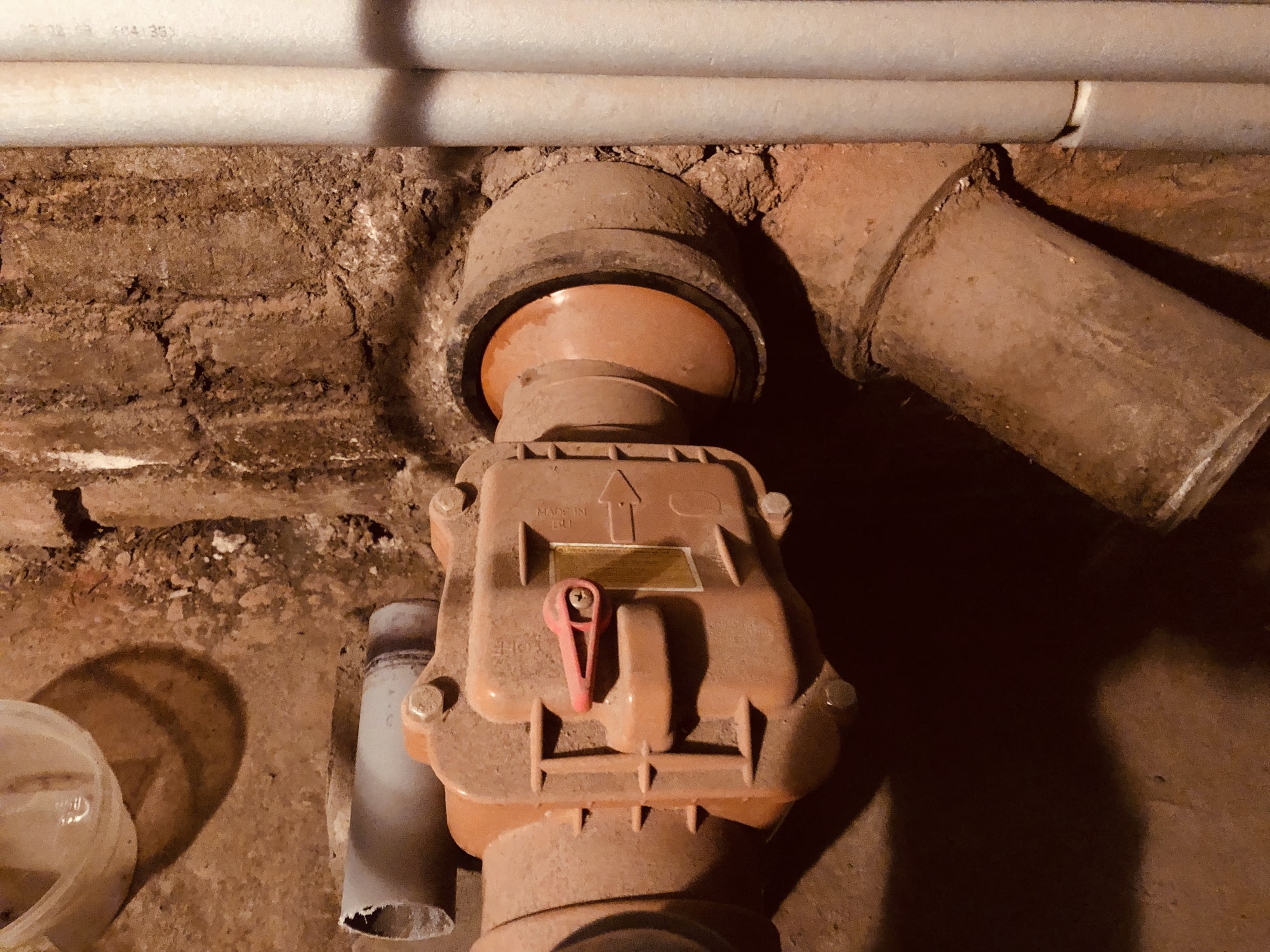
A backwater valve is a one-way device installed on a sewer line to stop sewage from flowing back into a home. It uses a flapper or gate that closes under reverse flow pressure. During normal flow the flap stays open so waste leaves the house. When municipal lines surcharge, the flap seals and prevents basement backups.
- Flapper-style valves use a swinging flap to block reverse flow.
- Gate-style valves slide into place for a positive seal.
- Automatic cleanable valves have removable access for debris removal.
- Low-profile floor-mounted valves fit under basement floor slabs.
A homeowner often asks if a backwater valve will eliminate all sewer smells, it reduces inflow but does not stop all odors. A professional will inspect the cleanout, lateral connection, and existing check valves to confirm risk. Technicians may use a dye test or visual inspection through a cleanout to see how flow behaves during heavy rain. Photos and recorded footage of the lateral help document conditions for decision making.
Proper operation depends on correct orientation, secure seals, and a clear access point for maintenance. Placement too far from the house connection can leave a gap where sewage bypasses the valve. For basement floor upgrades consider coordinating with a floor drain workplan like the one described in the basement floor drain upgrades resource. Homeowners in Montgomery, OH and Oakley, OH should have a plumber confirm layout and access before selecting an option.
Common Causes Of Basement Sewer Backups
Surcharging in the municipal sewer during heavy rain commonly forces sewage back into lower fixtures and basement drains. Tree root intrusion often narrows the sewer lateral and causes repeated backups as waste cannot flow freely. Grease and debris build-up inside the lateral or trap can gradually reduce capacity until a single storm triggers an overflow. A professional inspecting your system will note these blockages during camera inspection or when clearing a cleanout.
Collapsed or offset sewer pipes create low spots where solids collect and create backflow pressure upstream toward the house. Broken pipes sometimes allow groundwater infiltration that raises flow and overwhelms downstream capacity during storms. Older clay or vitrified pipes are more prone to fractures from ground movement or root invasion than newer materials. Technicians use a camera and recorded footage to locate offsets, breaks, and pooled solids before recommending a solution.
Incorrect plumbing connections such as downspouts or sump discharges tied into sanitary lines can increase volume and trigger backups during rain. A sudden load from an improper connection can overload a lateral that otherwise performs well. Homeowners noticing backups after yard drainage improvements should have a plumber confirm separations and discharge routing. For more on causes and homeowner steps to document an event, see the sewer backup resource linked here: sewer backup.
Partial backwater devices or damaged check valves reduce protection and may mislead homeowners into thinking the line is clear. A technician will perform simple diagnostic checks like a dye test at fixtures and a pressure check at the cleanout to confirm direction of flow. Visible signs include gurgling drains, unexpected fixture overflows, and sewage odors that intensify during storms. In Montgomery, OH and Oakley, OH properties, documenting these cues with photos and timing notes helps a plumber diagnose cause quickly.
Backwater Valve Options For Different Home Types
Homes with shallow foundations often suit a floor-mounted backwater valve that fits under or near the slab cleanout. These low-profile valves reduce excavation and keep the unit close to the home connection for reliable sealing during reverse flow. A plumber will check the cleanout, closet flange, and any nearby shutoff valves before recommending this style. For Montgomery, OH properties, accessibility and slab thickness often guide the choice between floor-mounted and external options.
Properties with easily accessible exterior laterals may benefit from an outside gate-style valve that installs before the sewer leaves the yard. Gate-style valves provide a stronger mechanical seal when municipal pressure pushes back toward the house. Technicians inspect the lateral, cleanouts, and use a camera to confirm the valve location will stop reverse flow without blocking maintenance access. In Oakley, OH and similar areas, outdoor placement can simplify servicing and avoid cutting into finished floor slabs.
Automatic cleanable backwater valves work well for homes where debris in the lateral is a concern, because they include removable access for routine cleaning. During inspection, a professional will look for solids, roots, and grease that could prevent a flapper from seating properly. They may perform a dye test at the cleanout and run a camera to confirm the valve seats under simulated backflow. If a household shows recurring solids buildup, this design can reduce emergency callouts and help technicians avoid repeated sewer drain cleaning service.
Combined systems pair a backwater valve with a sump pump or check valve to manage both sewage and groundwater inflow in lower-level homes. A plumber will confirm each component’s interaction by testing fixture drainage, checking the sump pump discharge line, and examining vents and P-traps for odor pathways. Proper arrangement prevents pressure conflicts where one device could reduce effectiveness of the other during a surge. When selecting a system, require a written inspection report and recorded footage showing valve orientation and lateral condition.
Ideal Placement And Installation Considerations
Position the valve so it sits between the house sewer outlet and the public lateral connection to ensure reverse flow reaches the device first. Installers often locate the unit near an existing cleanout or accessible chamber to allow routine inspection and service. A professional will verify pipe slope and alignment before cutting pipes to prevent trapping solids upstream of the valve. For some homes in Montgomery, OH, property line constraints affect how far from the foundation the valve can sit.
- Keep the valve accessible for inspections.
- Provide a removable access cover for cleaning.
- Allow enough straight pipe on either side for proper seating.
- Ensure the valve body matches pipe material and size.
When installing underground units, compacted backfill and proper bedding around the valve prevent shifting that can misalign seals. Technicians commonly use a camera inspection to confirm the valve seats properly after installation and to record footage for records. If the valve sits below floor level, plan for a sealed access hatch and adequate headroom for a plumber to work. In Oakley, OH older homes may require brief excavation to reach or relocate the lateral connection.
Orientation matters: flapper-style valves must swing freely and face the right direction to close under reverse pressure. Gate-style valves need correct guides and a clear track to seal without binding from debris. Installers will test by simulating backflow at the cleanout and watching valve operation with a camera or visual inspection. Afterwards they document results and provide a written note about access points and recommended maintenance intervals.
Warning Signs You Need A Backwater Valve Now
If your basement shows repeat gurgling in floor drains only during storms, this points to backflow entering the lowest fixtures. Another clear signal is sewage odors that grow stronger when neighbors report heavy rain or municipal surcharging. Visible wet spots on walls near drain lines or a damp ring on floor finishes after storm events suggest reverse flow reaching finished areas. A plumber will inspect the cleanout and run a dye test to confirm flow direction and blockage points.
Sudden backups in toilets and floor drains that coincide with municipal maintenance or mainline overflows mean the house connection faces surcharge risk. Frequent clogs in the main stack or recurring need for drain cleaning indicate solids or roots may prevent valve seating. Technicians will use a camera to look for roots, offsets, and pooled solids that could keep a flapper from sealing. They also check the condition of the cleanout and nearby shutoff valves during diagnosis.
A single fixture overflowing while others remain normal can reveal an isolated low spot in the lateral or a trap priming problem rather than full backflow. Professionals will measure pipe slope and inspect the closet flange and P-trap to rule out local issues before recommending a valve. If the property relies on a sump pump for groundwater control, coordinate that system check with valve assessment and follow sump pump maintenance guidance. Homeowners in Montgomery, OH should provide timing notes and photos to help technicians match symptoms to events.
Cold-weather concerns include frozen or stuck flappers in older valves that fail under surge, which technicians will test for free movement before proposing replacement. If your property has multiple building cleanouts, inconsistent backup patterns suggest the valve position might not stop all reverse paths. A plumber will perform pressure checks at strategic cleanouts and may reference a marked cleanout layout to document flow paths and risks. For long-term protection, combine inspection results with a planned maintenance schedule recorded in your service report.

When To Call A Professional For Installation
Call a licensed plumber if you see multiple backup events or suspect a buried lateral needs relocation to accommodate a valve. A professional will locate the house sewer outlet, inspect cleanouts, and plan a cut-in point that avoids traps or vents. They often recommend camera inspection and record footage to confirm where a valve will stop reverse flow. For complex layouts, this step prevents installing a valve that leaves alternate backflow paths open.
Contact a technician when you notice structural work or slab replacement is planned that affects access to the sewer line. Plumbers coordinate with slab contractors to position an access chamber or hatch that allows future valve service without new demolition. The installer will check pipe materials and sizes and propose compatible transition fittings before cutting. This planning reduces the chance of misaligned seals that cause failures later.
Reach out for professional help if roots, repeated clogs, or offsets appear during camera inspection, since these conditions can prevent a valve from seating properly. A plumber may recommend pipe repairs or lateral replacement alongside valve installation to ensure reliable sealing. They will use a pressure test and simulated backflow to confirm valve function after repairs, documenting results in a written report. Scheduling these combined services avoids repeated callbacks for the same issue.
Call a pro when a building permit or inspection will be required, or when code compliance questions arise, especially for properties in Montgomery, OH and Oakley, OH with shared laterals. The installer will prepare layout drawings, record footage, and coordinate inspections when needed to meet local rules. If excavation or major pipe work is needed, ask for a scope that includes cleanout relocation and an accessible valve chamber. A written estimate and maintenance plan help homeowners schedule installation with minimal disruption.
Permitting Requirements And Local Montgomery Rules
Local permitting often requires a plumbing permit before cutting into the building sewer or installing a backwater valve, so plan for inspection timelines. Permit offices typically ask for a diagram showing valve location relative to the house sewer and the public lateral connection. Expect an inspector to verify orientation, access hatch details, and that the valve does not block required cleanouts. Bringing camera inspection footage or a written layout helps speed review with the authority having jurisdiction.
- Check if a permit is required for sewer lateral work.
- Provide a layout drawing with the permit application.
- Show where access covers and cleanouts will sit.
- Schedule inspections after rough-in and final work.
Some municipalities require the valve to remain accessible without removing finished flooring, so plans should show a sealed access hatch and clearance. If relocation of a cleanout or addition of a chamber is needed, include those changes on permit drawings and details. An inspector may require a plumber to demonstrate the valve operation during the final visit or to provide camera footage. For Montgomery, OH properties, early contact with the local permit office clarifies submission needs and avoids delays.
Projects that include nearby water or gas line adjustments often need coordinated permits and utility-safe excavation practices. Discuss combined scopes with your plumber so they can include required notes and coordinate inspections, this helps when other trades are involved. For example, if new routing affects a water or gas service, a professional installer may reference coordinated work in their permit package. See guidance on related service planning in the gas and water line installation resource to understand how combined permits can be presented.
When submitting for permits, expect the inspector to note required materials, access dimensions, and testing methods to confirm seal integrity. Typical post-install tests include a simulated backflow or pressure test at the cleanout to show the valve seats under reverse conditions. Keep records of test results, camera footage, and the approved permit for future resale or insurance questions. Homeowners in Oakley, OH may find keeping a folder of inspection reports simplifies future property transactions or system upgrades.
Maintenance Tips To Prevent Future Basement Flooding
Schedule routine inspections of the valve and nearby cleanouts every six months, or after known storm events to catch wear early. A plumber will remove the access cover and visually check the flapper, gate, or seals for chips, corrosion, or stuck movement. Include camera footage or photos in service records so you can compare condition over time and spot gradual deterioration. If the access chamber fills with sediment during inspection, plan a cleanout and debris removal immediately to restore reliable seating.
Keep a simple maintenance log noting inspection dates, observed issues, and any test outcomes like pressure hold or simulated backflow results. During an inspection a technician may perform a dye test at a fixture and a pressure check at the cleanout to confirm correct operation. Record readings, photos, and brief notes from those checks so future technicians see trends and recurring problems. This log also helps when applying for insurance claims or showing compliance during property transfers in Montgomery, OH.
Protect the valve and chamber from freezing by insulating exposed covers and ensuring drainage away from the access hatch during winter months. If the valve sits below floor level, confirm that the hatch seals against moisture and that the surrounding area slopes away to prevent water pooling. Frozen or warped components can stick and fail during a surge, so test movement before heavy cold spells. When unsure about winter prep, contact a licensed plumber to add frost protection measures or insulation.
Train household members to recognize early warning cues like gurgling drains, slow floor drain recovery, or sudden odors and to report these immediately for inspection. A quick check of the nearest cleanout and temporary shutoff of nonessential fixtures can limit damage until a technician arrives. Schedule annual preventive cleaning of the lateral and valve chamber if your system shows solids or root intrusion during camera reviews. For professional maintenance or emergency checks, find qualified help listed at Halpin Plumbing plumbers in Montgomery, OH or contact your regular service provider in Oakley, OH for guidance.
Frequently Asked Questions
What are common backwater valve options for my basement?
Homeowners commonly choose flap-style backwater valves that close when sewer flow reverses, or spring-loaded check valves that respond faster to surges. Another option is a gate-style valve offering a robust manual shut for long-term closures during major backups. Floor-mounted basins with removable valve cartridges give easier access for cleaning and inspection without digging up main drains. Because improper installation can cause sewage backup or code issues, hire a licensed plumber to inspect, select, and install the correct unit.
How do I decide between floor-mounted and exterior valves?
Choose floor-mounted valves when the sewer line cleanout or main drain is inside the basement and access for maintenance is easy. Exterior valves suit homes with accessible sewer lines outside and where you want to avoid cutting basement concrete. Consider local permit rules, space for a buried unit, and freeze protection, a plumber can assess risks and placement. If flooding or sewage backup poses a health risk, stop use of affected areas and contact a licensed professional immediately.
Where should a backwater valve be placed for best protection?
Install the backwater valve on the main sanitary sewer line where it leaves the building, upstream of any basement fixtures and before any branch lines. Place it near an accessible cleanout or access panel so you can inspect and service the unit without digging. For properties in Montgomery, OH, position it above the basement floor level if possible and coordinate with the building trap and sump pump location. If there is any uncertainty or confined access, hire a licensed plumber because improper placement can create backflow hazards and require corrective work.
What signs indicate I need a backwater valve installed?
Repeated basement backups during heavy rain or when the sewer system is overwhelmed suggest you need a backwater valve. Foul sewage smells coming from floor drains or slow-draining fixtures after storms are clear warning signs. Visible sewage in basement drains, near cleanouts, or backup through laundry or shower drains indicates active risk, stop use and call a pro. For safety and correct sizing, have a licensed plumber inspect piping, cleanouts, and sump pump connections before installation.
Do I need a permit to install a backwater valve in Montgomery, OH?
Many local plumbing projects, including installing a backwater valve, typically require a permit from the city or county building department. You should contact Montgomery, OH building officials to confirm permit type and filing requirements before starting work. Installing a valve connects to the sanitary sewer and poses health and flooding risks, so hire a licensed plumber who will pull permits and meet code. If you see complex connections or lack an accessible cleanout, stop and get a professional inspection to avoid mistakes and hazards.