









Key Takeaways About Water Filtration Taps
Water filtration taps are dedicated drinking faucets that route water through specific media to improve taste and control scale. This summary helps homeowners and property managers decide options and maintenance timing when taste or mineral buildup becomes noticeable.
- Identify appropriate dedicated faucet styles for your kitchen layout.
- Prevent taste and odor with carbon rich media at the tap.
- Avoid premature clogging by using a sediment prefilter first.
- Spot scale early by checking aerators and kettle deposits regularly.
- Reduce hardness effects with ion exchange or scale inhibitor cartridges.
- Plan replacement intervals based on usage tests and visible cues.
Introduction
Many homeowners notice tap water that tastes metallic or leaves a chalky film on kettles and faucets. Those clues often point to mineral scale or chlorine and organic compounds in the supply. Choosing the right water filtration taps can improve taste while reducing scale buildup on fixtures and appliances. For property managers, addressing taste and scale prevents repeated service calls and appliance wear.
Dedicated filtration taps attach to a separate faucet to deliver filtered water only for drinking and cooking. These taps isolate filtered water from the main cold supply, reducing the risk of cross-contamination. Selecting between under-sink units and countertop dedicated taps affects space use and convenience. Home layouts in Montgomery, OH often influence which installation fits easily under the sink.
Filter media choices determine what contaminants get removed and how quickly cartridges clog. Activated carbon shines at improving taste and removing chlorine while scale reduction typically needs ion exchange or scale inhibitors. Some media combinations target both taste and hardness, but performance varies by water chemistry. A professional can test water to recommend the right media mix for a household.
Maintenance intervals matter because clogged or exhausted filters stop working and can trap bacteria. Typical replacement schedules depend on water hardness, usage, and the chosen filter media. If you notice slower flow, return of off tastes, or more scale, those are signs to inspect the system. For concerns beyond basic checks, contact a plumbing professional to diagnose and confirm next steps.
How Water Filtration Taps Improve Taste And Clarity
How water filtration taps improve taste and clarity means delivering dedicated, filtered water through a separate faucet for drinking and cooking.
Dedicated taps reduce taste issues by routing water through media like activated carbon before it reaches your glass. Homeowners often ask if a dedicated tap removes chlorine taste, and the answer is yes when carbon is used. A separate tap also prevents filtered water from mixing with the house cold supply. For properties in Montgomery, OH, this separation can simplify local installations under compact sinks.
- Removes chlorine taste and odor.
- Reduces sediment that clouds water.
- Limits particles that cause off-flavors.
- Delivers clearer water for cooking and beverages.
Clarity improves because sediment and fine particles get trapped by the filter before the tap. You may notice fewer particles when filling a clear glass or cooking with filtered water. A professional will inspect visible outlet clarity and run simple flow checks to confirm performance. If taste returns, those checks indicate when cartridges need replacement.
Some dedicated taps pair with specialty media to also slow scale formation at the point of use. Homeowners in Oakley, OH might prefer point-of-use scale-reduction if appliances show white deposits. A pro diagnosing diminished taste would check the cartridge, sample water, and use a pressure gauge during inspection. For more thorough system options and professional service, see water filtration systems.
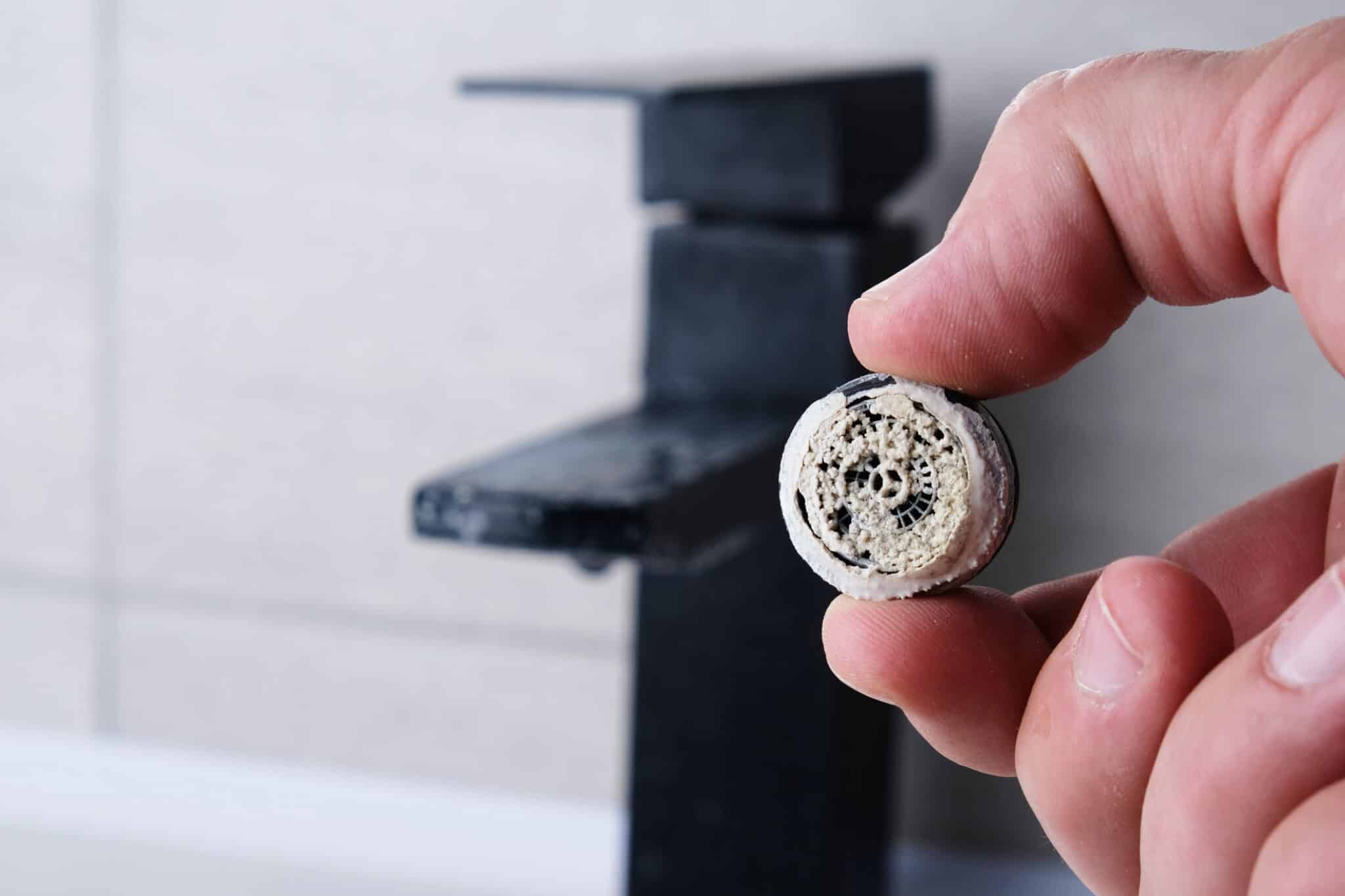
Why Scale Forms In Plumbing And How It Works
Hard water minerals like calcium and magnesium start scale formation when water temperature or pressure changes. These minerals remain dissolved under normal conditions but precipitate on hot surfaces and rough plumbing joints. Scale first appears as thin, chalky films before forming thicker crusts that narrow pipe passages. Homeowners may notice slower flows at fixtures or ticking noises from water heaters when scale accumulates internally.
Scale builds faster in appliances that heat water because higher temperature reduces mineral solubility and encourages deposition. A plumber diagnosing scale will check the water heater tank for visible deposits and use a pressure gauge to compare inlet and outlet pressures. They may also inspect faucet aerators and showerheads to find white flaking or uneven spray patterns caused by mineral blockage. For a clearer upstream view, sediment and particulate matter trapped ahead of a cartridge can indicate combined scale and debris issues, see sediment filtration.
Certain plumbing components act as nucleation sites where scale starts more readily, such as threaded joints, elbows, and rough interior pipe surfaces. Over time the deposit reduces effective pipe diameter and raises flow resistance, which explains why some faucets weaken slowly rather than fail suddenly. Professionals will perform simple diagnostic checks like measuring faucet flow rate and sampling water hardness with test strips. If hardness readings are high, installing point-of-use water filtration taps with scale-reducing media often helps at drinking outlets but does not replace whole-house softening.
Water chemistry changes during seasonal shifts or after plumbing work can accelerate scale formation unexpectedly for homeowners in Oakley, OH and Montgomery, OH. A technician confirming the cause will compare recent service records, inspect the pressure-reducing valve, and take hardness and pH readings. They might recommend targeted media, an ion exchange unit, or periodic descaling for appliances based on inspection outputs. When scale poses a medium safety risk or affects major appliances, contact a professional to confirm next steps and avoid DIY mistakes.
Common Contaminants Filtered By Home Systems
Common point-of-use systems target a mix of contaminants homeowners notice first, like chlorine, sediment, and some heavy metals. Activated carbon removes chlorine taste and many organic compounds that cause odors in drinking water. Sediment cartridges capture sand, rust, and visible particles before they reach the dedicated tap. A professional inspecting these issues will visually check outlet clarity and sample water for lab confirmation.
Other media focus on dissolved minerals and specific ions that affect taste and scale on fixtures and kettles. Ion exchange resins reduce hardness ions like calcium and magnesium at the tap, lowering local scale buildup. Certain specialty media trap lead or reduce copper, which homeowners sometimes taste or see as blue-green stains. A technician would test for those metals with a sample and a laboratory or field test kit to confirm removal needs.
Some filters include bacteriostatic elements or sub-micron membranes to address microbiological concerns in vulnerable situations. Membrane filters with pore sizes under one micron remove cysts and many bacteria, improving safety for immunocompromised residents. Homeowners who notice strange tastes after plumbing work or visible cloudiness should keep filtered samples for a professional review. For choices that complement whole-house water conditioning, review the role of water softeners in reducing upstream hardness load.
Iron and manganese create discoloration and metallic tastes that dedicated taps can reduce with the right media blend. Oxidation filters or catalytic carbon often handle low levels of iron and manganese at the point of use. A plumber diagnosing these will inspect aerators, take color and turbidity readings, and run a simple iron test strip. If contamination looks persistent or safety related, contact a professional for confirmatory testing and treatment planning.
Filter Media Options And How Each Works
Granular activated carbon traps chlorine and many organic compounds through adsorption, improving flavor quickly at the dedicated outlet. This media works best for taste and odor but does not remove dissolved hardness minerals. Professionals often check outbound samples and pressure before confirming carbon needs replacement. Homeowners in Oakley, OH may notice immediate taste change after installing carbon at a tap.
- Activated carbon improves taste and smell.
- Sediment cartridges protect downstream media.
- Ion exchange reduces calcium and magnesium locally.
- Scale inhibitors slow mineral deposits at the faucet.
Sediment cartridges sit before finer media to capture sand, rust, and particles that clog other filters sooner. These cartridges extend service life of carbon and membranes by removing visible debris. During diagnosis a plumber inspects the sediment trap and may run a turbidity check. Replacing prefilters on schedule prevents pressure drop and channeling of the main media.
Ion exchange resins swap sodium or hydrogen for hardness ions to reduce scaling at the point of use and improve kettle life. They work well at dedicated taps but require periodic resin regeneration or cartridge replacement depending on design. A technician confirms resin function by measuring hardness before and after the filter with test strips. For whole-home hardness concerns that exceed point-of-use capacity, consider pairing with broader treatment like those described in water softening solutions.
Ceramic or membrane elements provide sub-micron physical barriers for bacteria and cysts when required at a drinking faucet. These media need careful maintenance to avoid biological growth, flushing and timely replacement matter. A professional diagnosing microbiological risk will collect a sample and may recommend a membrane rather than carbon alone. For safety or ambiguous results, contact a qualified plumber to confirm and act.
Choosing The Right Water Filtration Taps For Home
Start by matching tap water filter style to your kitchen layout and daily habits, focusing on practical use and maintenance access. Decide between a single dedicated chrome faucet, a low-profile dispenser, or a pull-down style adapted for a filtered line. Consider reach and clearance for filling pitchers and cookware without compromising under-sink space for cartridges or a sediment prefilter. A professional can confirm whether your existing shutoff valves and supply lines suit the chosen tap before installation.
Next, select filter media that aligns with the household’s dominant water concerns shown by tests and observations at the tap. If mineral buildup appears on mugs and showerheads, media that reduce hardness at point-of-use may help alongside a whole-house softener. For chlorine taste or organic odors, a carbon-rich cartridge typically restores flavor quickly at the dedicated outlet. A technician would compare pre- and post-filter readings to confirm the chosen media meets expectations.
Think through flow rate and cartridge capacity as practical trade-offs between convenience and replacement frequency in busy homes. Higher flow models use larger cartridges that extend service intervals but need more under-sink room and stronger mounting. Low-flow designs can last longer on the same media volume but may frustrate users when filling large containers. During diagnosis, a pro measures flow with a simple bucket test and pressure gauge to size an appropriate tap and filter combo.
Installation compatibility matters for long-term reliability and easier maintenance in Oakley, OH and Montgomery, OH properties. Confirm the dedicated tap mounts on your sink or counter and that the cold water feed can be isolated with a shutoff valve. Check that replacement cartridges are readily available and match the manufacturer’s specifications to avoid voiding warranties. If you notice decreased flow, odd tastes, or visible particles, have a plumber inspect the cartridge seating, O-rings, and sediment prefilter for quick confirmation.
Maintenance Intervals For Filters And When To Act
Plan filter replacement based on cartridge capacity and household use rather than a fixed calendar date for best performance. Check the manufacturer’s rated gallons and compare to recent water usage to estimate life remaining. A visible pressure drop at the dedicated faucet often precedes complete clogging and calls for cartridge change. For homes with rapid mineral buildup, monitoring intervals monthly may catch issues before flow falls dramatically.
Record simple observable cues each month: taste return, slow flow, and visible particles at the tap. Inspect the dedicated tap aerator and cartridge housing for scale or sediment that signals replacement need. A homeowner can run a bucket flow test and note minutes per gallon to track decline over time. When readings show significant loss, swap the filter and re-check flow and taste immediately.
Some media types need more frequent attention than others due to their removal mechanisms and clogging tendency. Sediment prefilters typically require replacement more often than activated carbon because they trap visible debris first. Ion exchange cartridges can exhaust faster in hard water areas, so pair schedule checks with a hardness test strip to confirm function. If minerals return or kettle scale increases, replace the cartridge and consider testing iron and hardness levels.
Professionals diagnose exhaustion by comparing pre- and post-filter samples and measuring pressure across the filter housing with a pressure gauge. They may also inspect O-rings, shutoff valves, and the dedicated tap for leaks that affect performance. For homes in Oakley, OH and properties in Montgomery, OH, persistent high-mineral signals should trigger a more thorough review. Read about signs of heavy mineral deposits in the related resource high mineral buildup.
When To Call A Professional For Filtration Service
Call a professional when simple checks no longer identify the cause of poor outlet performance. If filtered water develops odd cloudiness or sediment despite recent cartridge changes, a technician can perform confirmatory tests. They use a pressure gauge, hardness strips, and visual inspection to find hidden issues in the housing or supply line. For homeowners in Oakley, OH, recurring symptoms that follow cartridge swaps often need a professional diagnosis to avoid repeated replacements.
- Unclear or discolored water after replacement
- Persistent off tastes or odors
- Rapid pressure loss at the dedicated tap
- Leaks around the filter housing or fittings
If you smell chlorine or organic odors that return quickly, a plumber will sample pre- and post-filter water for comparison. They may test for chlorine residuals and run a turbidity check to confirm media failure. A pro also inspects fittings, shutoff valves, and the dedicated tap for mechanical issues that mimic filter exhaustion. When sampling suggests a media mismatch, they recommend a different cartridge or additional treatment stages.
Call for service when scale appears inside the tap or on nearby fixtures soon after installing a scale-reduction cartridge. A technician will measure hardness, examine aerators, and inspect the tap’s flow path for mineral deposits. They might replace worn O-rings, clear clogged aerators, or advise pairing point-of-use media with a whole-house solution. For Montgomery, OH properties with stubborn deposits, professional testing prevents wasted replacements and targets the correct treatment.
Simple Installation And Replacement Steps For Homeowners
Shut off the cold-water supply to the dedicated line before you start and relieve pressure by opening the filtered tap briefly. Remove the old cartridge housing using the hand wrench or by hand if it is a quick-change model, watching for residual water in the bowl. Inspect the O-rings and replace them if they show cracks or flattening, damaged seals cause leaks and poor suction. When installing the new cartridge, align tabs and seat the element fully to prevent bypass around the media.
Check the tubing connections at the shutoff valve and the dedicated faucet for tight compression fittings or push-fit joints that can loosen over time. After reassembly, slowly turn the supply back on and watch for drips around the housing and fittings for at least five minutes. Run water through the dedicated tap to purge trapped air and flush carbon fines until the flow clears, which also helps stabilize taste quickly. If flow seems unusually low after flushing, confirm the shutoff valve is fully open and the cartridge is seated correctly.
Use a hardness test strip and a basic turbidity check to confirm the replacement restored expected performance before assuming the job is complete. If results fall short, a technician would inspect the supply pressure with a pressure gauge and check for sediment further upstream. For homeowners who want continuous monitoring, consider reading about methods to monitor water quality in real time and detect changes early. Keeping a simple log of replacement dates and test readings helps a professional diagnose recurring issues more quickly.
When replacing a dedicated tap assembly, ensure faucet mounting and deck holes remain sealed to prevent cabinet moisture and wood damage. If you spot scale inside the faucet or mineral flakes during replacement, document the condition with photos for a technician to review later. For homes in Oakley, OH and properties in Montgomery, OH, periodic visual checks around the filter and faucet reveal leaks and corrosion before they worsen. If any step feels uncertain, contact a licensed plumber to avoid mistakes that could cause leaks or void warranties.
Frequently Asked Questions
What are the dedicated tap options for water filtration taps?
Dedicated tap options include under-sink single-handle dedicated faucets that mount beside the kitchen faucet for filtered water delivery. Wall-mounted dedicated taps suit utility sinks or tight counter spaces while preserving counter area. Some systems use deck-mounted petite faucets designed to match kitchen finish and provide separate cold-only delivery. If you notice leaks, taste issues, or mounting instability, stop use and contact a licensed plumber for inspection and repair.
How do different filter media reduce scale at a tap?
Calcite and magnesium oxide media soften water slightly by raising pH and precipitating hardness minerals before the tap. Polyphosphate cartridges sequester calcium and magnesium ions, slowing scale formation on fixtures and appliances. Template-assisted crystallization converts dissolved hardness into inert microcrystals that pass through the faucet without adhering to surfaces. If you suspect heavy scaling or unusual water chemistry, exercise caution and have a plumber test water and recommend the correct media.
How often should I replace cartridges for a drinking faucet?
Most drinking-faucet cartridges need replacement every 6 to 12 months depending on water use and incoming water quality. Heavy sediment, hard water, or visible taste and odor changes can shorten cartridge life and signal replacement. A professional can test flow rate, pressure at the shutoff valve, and run a water analysis to confirm cartridge condition. If you see leaks, loss of flow, or contamination concerns, stop use and contact a licensed plumber for safe replacement and verification.
When should a pro test my tap for hardness or contaminants?
Have a professional test your tap for hardness or contaminants when you notice taste, odor, or white scale on fixtures. Schedule testing if you install water filtration taps or switch filter media to confirm performance. Test annually for general monitoring and sooner if local water advisories or plumbing changes occur. If tests show high hardness or harmful contaminants, stop using affected water for drinking and call a licensed pro for remediation.
Can a point-of-use tap remove chlorine taste and odors?
Yes, many point-of-use water filtration taps reduce chlorine taste and odors by using activated carbon cartridges. These filters adsorb free chlorine and organic compounds that cause smells and off-flavors. Filter effectiveness depends on media quality, flow rate, and cartridge age, so check manufacturer performance data. If you detect strong chemical smells or health concerns, stop use and contact a plumbing professional for testing and replacement recommendations.